




Table of Contents
▼- Banking Officer Resume Example & Writing Guide
- How to write a Retail and Corporate Banking Officer resume?
- 1. Choosing the right template
- 2. A clean header and a compelling professional summary
- 3. Work experience and skills to give you an edge
- 4. Certain skills that you can add to your banking officer portfolio
- 5. Add certifications and educational background to cement your foundation
- Some formatting tips for a strong finish
- FAQs
- Q.1 What is the Retail and Corporate meaning?
- Q.2. How long should my resume be?
- Q.3 Should I edit my resume according to the job description?
Banking Officer Resume Example & Writing Guide
A retail banking officer is one of the most versatile job profiles actively available in the market. You need to mitigate more than several tasks, such as managing customer relations, promotion, and ensuring efficiency. That is why the demand for such a profile is very high, and recruiters are always on the hunt for a versatile officer in the retail and corporate banking sectors.
However, over the years, this fast-paced industry has evolved exponentially, making it all the more saturated. To stand out, you need to be brave, willing to take risks, and also guide the organization to a better future. And that is where a well-structured retail banking officer resume comes in.
A well-crafted resume can give you the exact edge you need over your competition and make you stand out in recruiters' eyes. So, before you start your hunt for retail banking jobs, take a look at this guide. No matter whether you are a fresher or a seasoned veteran in this industry. This guide will help you craft a perfect resume that will help you in your next hiring process.
How to write a Retail and Corporate Banking Officer resume?
1. Choosing the right template
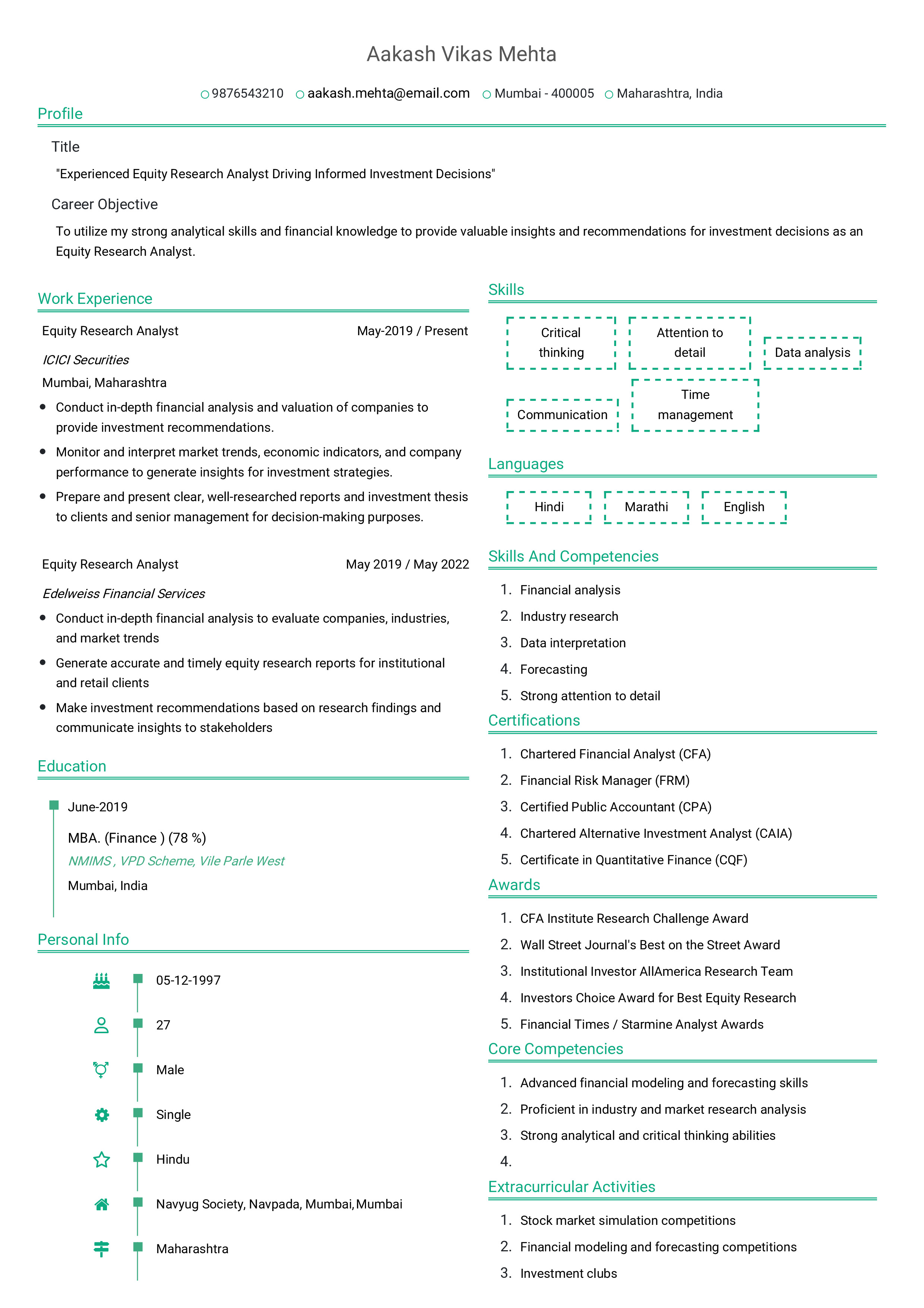
The first and foremost step you have to follow is to select the right template and format for your resume. It might not seem much, but a resume is your first impression on the organization and recruiters. So, making sure that your resume contains all the details without feeling too overwhelming will help to communicate your desired information easily.
In most cases, the reverse-chronological order works the best, which showcases all your achievements from the most recent to the oldest. However, if you are a fresher or have less experience, you can also opt for a more functional and a combination of both.
Related: Tips to make your resume standout.
2. A clean header and a compelling professional summary
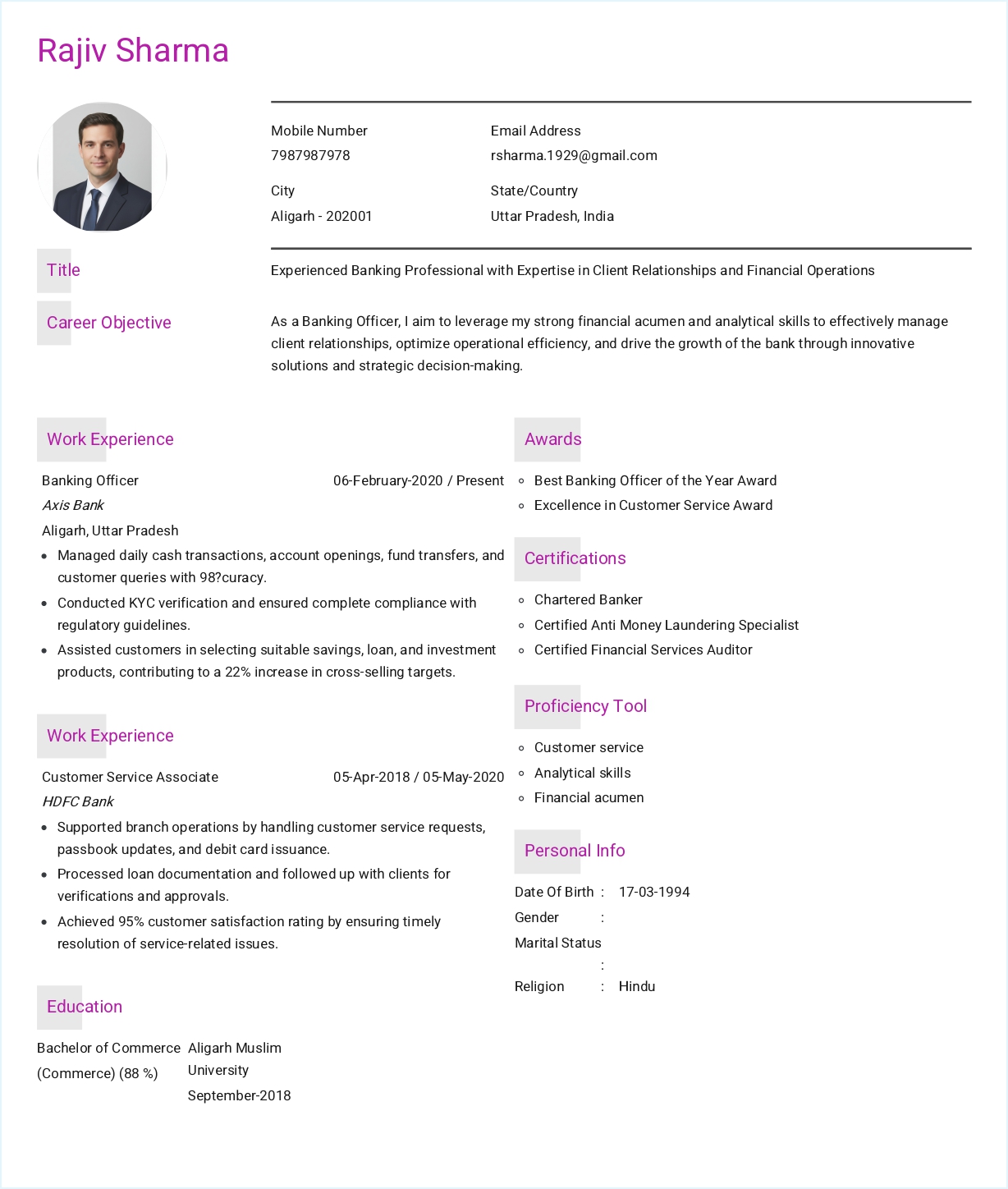
Now that you have started crafting your resume, your header must look clean. The header section must contain all the personal details that a recruiter will need to contact you if they are impressed by your resume.
Add your full name and contact details(Email, phone number, and your current address). You should also add your LinkedIn profile link and update it regularly, as the recruiter will most likely go through it to see your career trajectory.
Following that, the next section of the resume is your professional summary. While a summary should never be more than 100 words, it should convey all your major skills, qualifications, and eligibility for the job. The best way to do it is to design your professional summary according to the retail banking job description given by the organization on their portal.
Example:
Results-driven Banking Officer with 4+ years of experience in retail banking operations, client servicing, and cross-selling financial products. Skilled in managing customer portfolios, resolving queries, and driving branch growth through strategic relationship management.
3. Work experience and skills to give you an edge
This is where you will get an edge over your competition. Keep in mind, for any corporate or retail banking group, hands-on experience is extremely crucial. So, list down all your previous works or jobs in this section. Start with the most recent one with all the responsibilities and duties you had to perform during that tenure.
Example:
Banking Officer | HDFC Bank, Mumbai | Jun 2021 – Present
- Managed a portfolio of 250+ retail clients, achieving a 95% customer retention rate.
- Processed loan applications worth ₹15 crore with 98% accuracy and adherence to RBI compliance.
- Increased cross-sell ratio by 25% through effective product recommendations.
- Collaborated with credit and risk teams to streamline corporate loan approvals, reducing turnaround time by 20%.
Following that is your skill section. The common mistake that most candidates make is to list down every skill they have learned without any direction. Rather, take a look at the job description and then group all the relevant skills you possess accordingly. Master the difference between corporate and retail bank job skills and organize them according to recruiters' desire, not according to your own preferences.
4. Certain skills that you can add to your banking officer portfolio
- Core Banking Skills: Retail & Corporate Banking Operations, Customer Relationship Management (CRM), Financial Analysis & Credit Appraisal, Loan Processing & Documentation, Regulatory Compliance & KYC, Risk Management & Internal Controls.
- Business and Technical Skills: Cross-Selling & Upselling, Portfolio Management, MS Excel / Core Banking Software (Finacle, Flexcube, T24), Data Analysis & MIS Reporting, Financial Advisory
5. Add certifications and educational background to cement your foundation
If you are a fresher, your certifications would replace the experience section, and would just as well. It would showcase your zeal and enthusiasm towards learning new things. A value that every organization would love to have.
Examples:
- NISM or NCFM Certification
- Certified Credit Professional (CCP)
- Certificate in Retail Banking (IBA)
- Financial Risk Management (FRM)
- Certified Banking & Credit Analyst (CBCA)
Next, list all your educational qualifications in reverse chronological order as well. Mention everything explicitly, as it will explain your foundation and how well you understand what is retail banking and corporate banking.
Also, add any extra co-curricular activities and projects that you undertook during your education. While these will not add to your hard skills, they will showcase your leadership quality, creativity, and portray you as a team player.
Some formatting tips for a strong finish
-
Keep the length to 1 page, unless you are applying for senior roles. In that case, the resume could use another page.
-
Use professional fonts like Calibri, Times New Roman, or Lato with 10-12 pt size and 1-1.5 spacing.
- Always save your resume in PDF format to maintain the layout.
Related: Write an ATS- friendly resume quickly in few steps.
FAQs
Q.1 What is the Retail and Corporate meaning?
Retail banking serves individual customers with services like savings accounts, mortgages, and credit cards. Corporate banking provides financial services to businesses and companies, including loans, cash management, and trade finance.
Q.2. How long should my resume be?
Try to stick to one page unless you are applying to Managing Director-level positions.
Q.3 Should I edit my resume according to the job description?
Absolutely. Customize your CV to match a retail or corporate bank job description. It will give it a personal touch and will help the recruiter identify whether you have the desired skill or not quickly.