
Table of Contents
▼- Creative Designer Resume Example & Writing Guide
- Understanding the role and tailoring the resume accordingly
- How to craft the perfect creative designer resume?
- 1. Header
- 2. Professional Summary
- 3. Core Skills
- 4. Work experience
- 5. Education and certification
- Some formatting tips to elevate your application
- Conclusion
Creative Designer Resume Example & Writing Guide
A creative designer is one of the most misjudged yet one of the most crucial roles in any organization. It works at the intersection of imagination, creativity, brand story and, most importantly, on how to communicate that story. Unlike the graphic designer duties, which only revolve around the visual department, a creative designer job profile is responsible for new ideas and how to execute those ideas into a storytelling narrative that narrates the message of the organization while attracting brands, collaboration and other products.
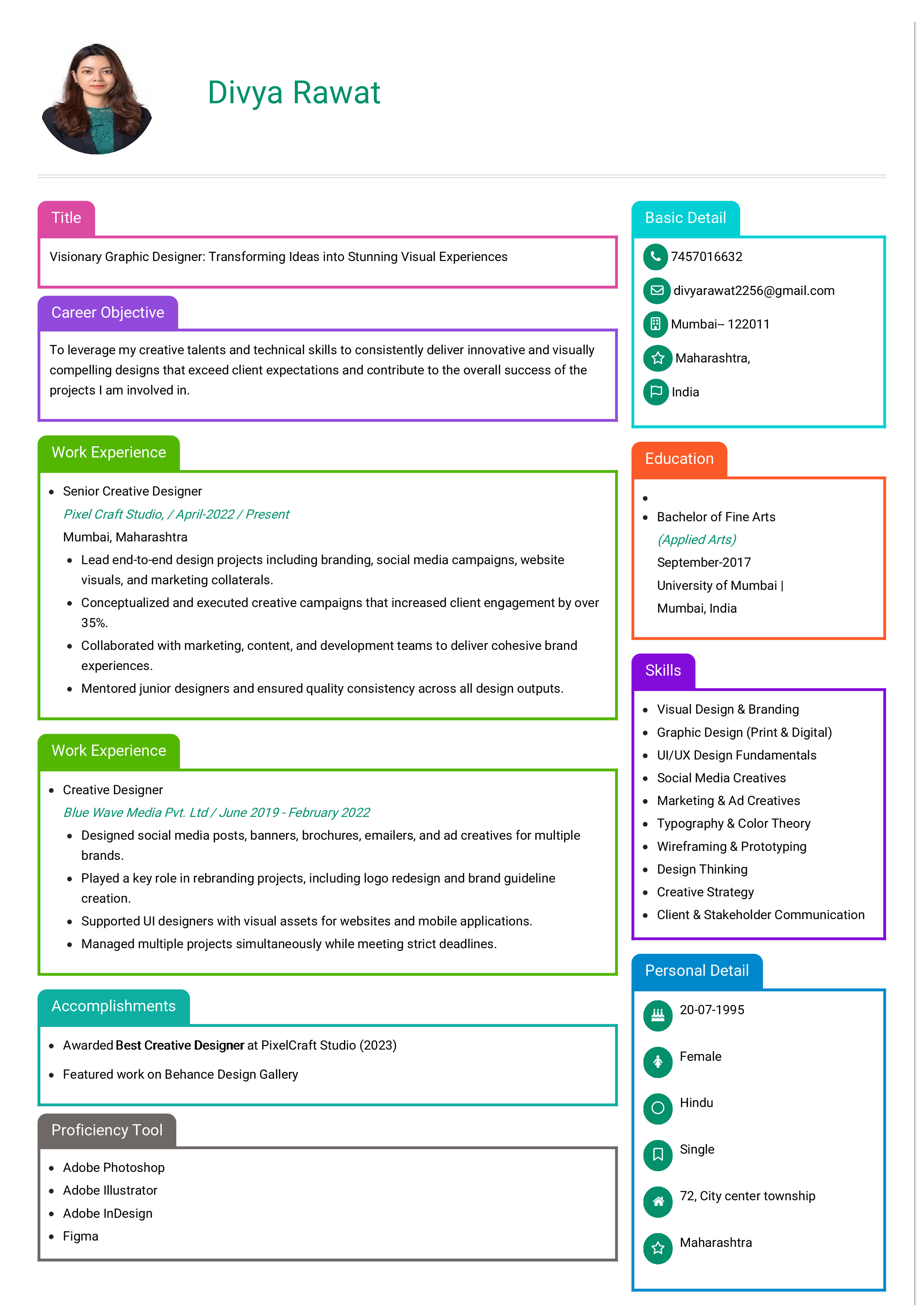
As a creative designer, you have to take a rough idea and make it a polished outcome that will attract engagement. Surely, with a role that is so focused on execution, your creative designer resume should also convey that. It should revolve around your strategic thinking, adaptability and ability to deliver impactful solutions across the board. While it might sound like a task, we have got a perfect solution for you. Our experts at JobsCruze have crafted a perfect creative designer resume guide that will tell you the exact steps you need to take while crafting your resume for creative designer to grab recruiters' attention immediately.
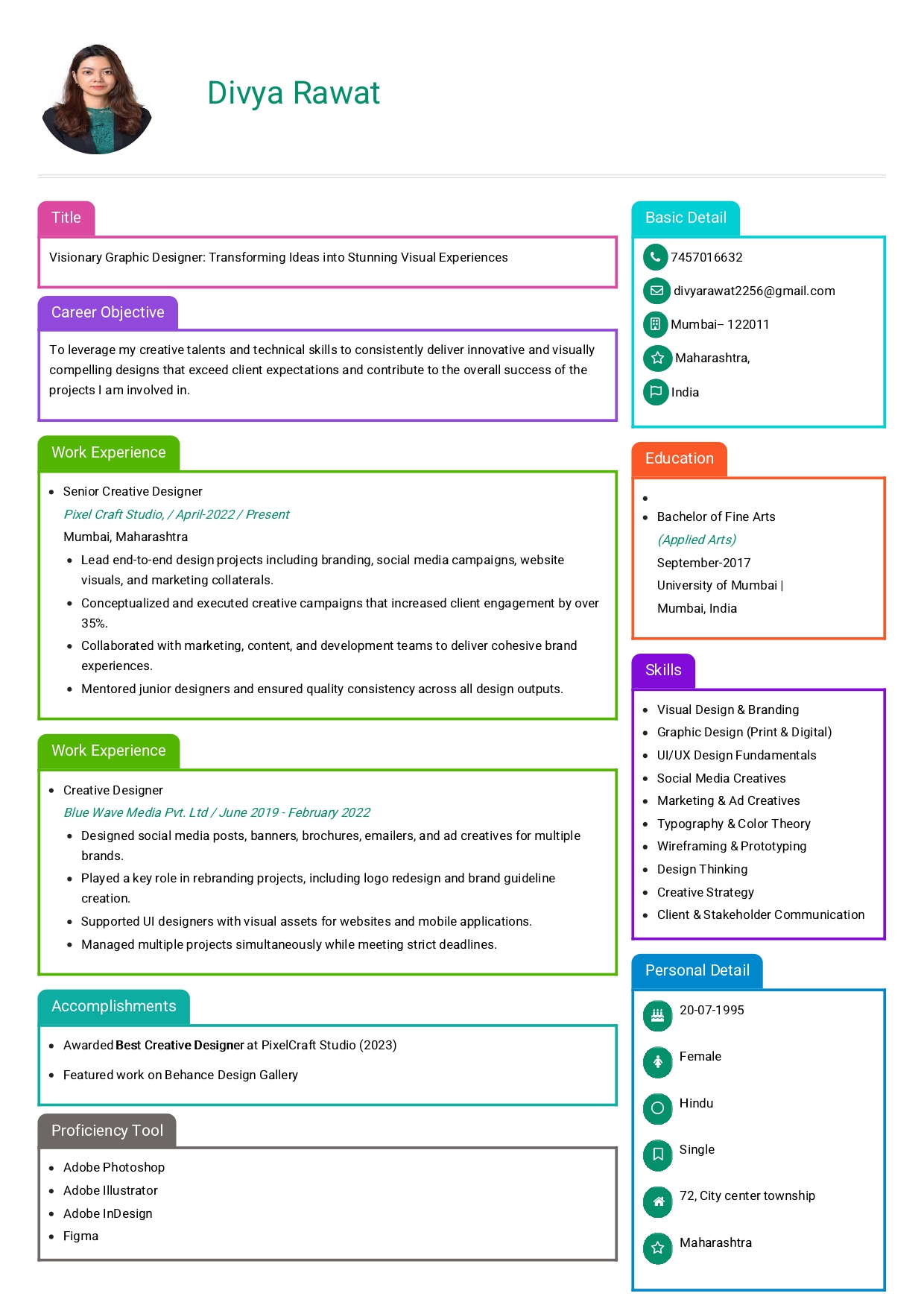
Understanding the role and tailoring the resume accordingly
The first thing you need to do is understand the role you are applying for. While your creative designer background will remain the same, every organization wants something different from their designers. It will involve a mix of critical thinking, collaboration with different teams, storytelling abilities, and idea-generation capabilities.
So, rather than simply listing down all your achievements and experience, try to highlight several points:
- How can you take a rough idea and shape it according to the company’s desire. Your knowledge of advertisements, packaging, events, websites, and campaigns will come in handy.
- As mentioned earlier, creative designer is an execution based role. So, try to shine light on your problem-solving abilities. Highlight how you solved problems like communication gaps and customer engagement in previous roles.
- Always quantify your achievements. Use numbers to highlight the engagement growth, brand experience and other things so the hiring manager knows who exactly he is hiring.
All these points are essential. However, you need to tailor them according to the industry and organization you are applying for. Every industry and company needs different strengths and while you might have those, it all depends on how you present them. So, read the creative designer job description before starting your resume and give priority to the skills and achievements that the company wants.
How to craft the perfect creative designer resume?
Now that you have understood the role, it is time to work on your resume. Start by selecting a professional-looking template. You can head to JobsCruze and select from our carousel of ATS-friendly creative designer resume templates that will surely catch the attention.
Following that, select a format. Mostly, the reverse-chronological format works the best. However, if you are a fresher, you can opt for a functional one as well. Now that these things are out of the way, here are the most important sections that your resume should have:
1. Header
The header is an important part of your resume as it tells the recruiter how to contact you if they are impressed by your application. So, keep it clean, concise, and readable. Always use a professional font like Calibri, Times New Roman, and include your full name, phone number, email ID, LinkedIn profile, and your portfolio link. While the portfolio link is optional, looking at your creative design website templates firsthand will impress the recruiter far more.
2. Professional Summary
Use 2-3 lines to introduce yourself and use them like a talent pitch to tell the organization everything you offer. Shine light on your relevant skills and try to narrate a story.
Example:
Creative Designer with a strong focus on concept development, brand experience, and campaign storytelling, skilled at transforming abstract ideas into compelling and strategic creative solutions.
3. Core Skills
Well, this is a practical profile. So, your creative designer key skills will make the most difference in impressing the organization. Here are some of the key skills that brands look for:
- Creative strategy & ideation
- Campaign concept development
- Brand storytelling and positioning
- User-centric thinking
- Visual conceptualization
- Art direction support
- Cross-functional collaboration
- Creative research & trend analysis
- Presentation and pitching skills
Secondly, don’t shy away from mentioning your soft skills, as most of your work will be around people and other teams. Finally, as mentioned, prioritize it according to the job description.
4. Work experience
Use reverse chronological order and start from your most recent job to the earliest. Use bullet points to shed light on your roles and the impact you created. Explain the problem and the solutions, your solution, and the outcome it led to. Try to be as diverse as possible with the projects, so that the recruiter knows that you can deal with multiple responsibilities.
5. Education and certification
Finally, your education and certification sections will showcase your foundational knowledge and your curiosity in the field. Keep it crisp and to the point. Include all your degrees in reverse chronological order, and if you have any relevant certifications, mention them separately.
Some formatting tips to elevate your application
- Length: Ideally, your resume should be completed on one page. If you are applying for a senior position or have extensive creative direction experience, it may go up to two pages.
- Layout: As mentioned, use a clean layout without any heavy visual elements, as it might get stuck in the ATS system that the company uses to filter out applications.
- Structure: Use a similar font throughout the resume, as inconsistent fonts can make it look unprofessional. The same goes for font sizes. Ideally, use 10.5–11.5 for body and 13–15 for section headers.
- File Format: Unless mentioned, always save and send your file in PDF format to maintain its formatting across multiple operating systems.
Conclusion
A creative designer's resume should be a blend of imagination, clarity, and a showcase of problem-solving skills presented in a structured and professional manner. Your conceptual strength and creativity will communicate how well-versed you are in this field, and when paired with your portfolio, it will have an even bigger impact. If crafted right, your resume can shape your design experience in a manner that can be presented to everyone and at JobsCruze, we provide exactly that.
Advance your career with a resume that distinguishes you from the competition. Utilize the JobsCruze Resume Builder to swiftly craft a refined, ATS-compatible resume within minutes. Click here to build your professional resume today and enhance your likelihood of securing employment with JobsCruze!